
Blogs

Slow Down

It’s important to slow down, to hear, to see, and not miss an unrecognizable blessing!

Hello. I’m back from my summer break and must say I feel rested and refreshed. I’ve learned it’s okay to put things aside and rest for a while. This was not always typical of me. I had to always be busy or actively working on or doing something new. I was driven and consumed by success, ambition, making money, climbing the corporate ladder, and getting things right (especially this Christian life)–quick. My drive and what was compelling it, I discovered, had nothing to do with God! My drive was worldly, often fueled by insecurity and wrong motives. I’ve learned and still am learning the importance of slowing down, smelling the flowers, and gaining the right perspective. We’re all familiar with this traffic sign. It alerts drivers to exercise caution in a particular area because pedestrians are walking nearby. Drivers should slow down.

Slowing our pace, pulling away from demands, streamlining expectations, and drawing away from people sometimes must be beneficial for us. Didn’t Jesus do it? Mark 8:35 shows us He did. It says, “Very early in the morning, while it was still dark, Jesus got up, left the house, and went off to a solitary place, where he prayed. Even our Creator, God, after He completed His creative work, rested. Genesis 2-3 tells us, “By the seventh day God had finished the work he had been doing; so on the seventh day he rested from all his work. Then God blessed the seventh day and made it holy, because on it he rested from all the work of creating that he had done.” Surely, if Jesus stopped healing, teaching, and preaching to regroup, and God, the Father, rested after work, shouldn’t we do the same?

For twelve years, I’ve been living with multiple sclerosis (MS). Before MS, I was naturally energetic and fast. My brain thought fast. I walked fast. I finished tests and spelled words fast. I typed, prepared documents, and proofread fast! I cleaned the house fast! And still, even now, I respond fast to a crisis. This was me. Fast could have been my nickname. It’s how people may identify me. No doubt, the MS has contributed to my slower pace now, (although my son is constantly alerting me still to, “slow down, Mom”). There was something more, however–besides MS–that triggered in me a need to slow life down. First, the more I experienced God in my life, I realized, unlike our fast-paced American culture and world, God doesn’t always immediately move when I need or want Him to. He doesn’t always quickly respond to my requests. God moves, responds, and acts in His time. This is sometimes difficult for us to grasp, especially when it involves something we believe He could or should have prevented if He would have. However, God’s kingdom is a mystery to us; it does not function or operate as earthly kingdoms. He reveals pieces about it to us little by little, because its ways are foreign to human ways. No one can say they have completely figured God out.

Second, this idea about, “setting our minds on things above, not on earthly things” (Col. 3:2) is not something we immediately comprehend. Ours is a fast-paced, fast answering, fast problem-solving world. Society tells us to “weather the storm” and “keep it moving.” Even as we watch on television the world calamities that happen, we hear news network reporters asking, “How quick was the response? How soon will repairs start? How fast did law enforcement arrive? When will the electricity be restored?” Since information now travels so fast via the internet, satellite, and cell phones, one is thinking, “Wow! Didn’t the catastrophe just happen?” But, this is our world–fast. It was my thinking too.

In my upcoming book, I talk about how as a child I visualized God as a superhero, like Superman, flying through the skies, saving the world from evil. I’ve since grown up and realized, however, God may not always act fast on my behalf. As a member of His family, there are times when daily, weekly, or year after year, my prayers to God continued–unanswered. I thought they were honorable prayers too, prayers that deserved special attention because they concerned areas of struggle and weakness I had or a sin I wanted to overcome. I mean, “God hates sin,” right? He’ll be here fast to help with this one. To my surprise, God didn’t immediately show up, let alone even address the situation I put before Him. He didn’t immediately come and show me a way out–sometimes until years later. God didn’t always immediately strengthen me, show me what to say, or heal my broken heart. I recall times crying out earnestly to Him, in anguish, seeking His help on a matter, his touch to relieve a pain that I felt warranted His immediate response. God did respond—but in His time. Contrary to how fast our society says we should move to keep up, I recall, in between my prayers to God and His response to them, I did: hurt, feel pain, cried, sweat, struggled, wondered, and thought. I did have to wait.

We don’t realize how earthly-minded we still are as Christians.  Instead of it being God’s kingdom driving us, we’re being driven and propelled forward maybe by our culture and societal norms and values, past hurts, settling a score, competing with someone, words spoken that left a scar, attempts to correct a past failure, and other things only you know. It’s wise to check in with ourselves to see what’s really driving us; it may not always be God.

When we’re so busy, moving fast, making things happen, and getting things done, at some point, we may finally look up and see, we missed the entire process and important small details. We neglected to recognize the still small voice inside us saying, “Stop, he’s hurting; she’s crying, sit a minute; look at Little Joey’s picture he drew for you; your husband had a rough day, rub his shoulders; look at that beautiful skyline; pick up that pretty Lily; go visit your sister today; tell them about Jesus, they’re ready; go, it’s parent/kids day at school; give her $20, she’s hungry; go visit your cousin in the hospital; hug him, he’s sad; sit down and listen, they’re depressed.” These seemingly insignificant whispers are wherein our blessing lies; it’s God quietly, gently speaking, and when we notice, we “do” what’s on His heart. Let’s slow down so we won’t miss these gentle nudgings anymore. For, it’s in doing these where our true success is measured—for God’s kingdom, that is.

Be blessed until next time!

Follow Me

Get new content delivered directly to your inbox.

A Mother’s Treasured Heart

Luke 2:19 (NIV) tells the story of how Jesus’ mother, Mary, treasured up and pondered in her heart words the Shepherds spoke about Jesus Christ. After the angel revealed to them who Christ was, they went to find this child. They found Mary and Joseph with the child and proclaimed to them and those nearby everything the angels had said about Jesus.  Verse 17 says, “When they had seen him, they spread the word concerning what had been told them about this child…and all who heard it were amazed at what the shepherds said to them. ” The scripture goes on to say about his mother, “But Mary treasured up all these things and pondered them in her heart.” Surely, Mary was just as amazed as the others by what the shepherds said. She did not fully understand what these words meant about the child she had just given birth to.

However, she “treasured” and “pondered” on them, the text says. These words reflect more than just simply thinking about something. These words are used as verbs here, which denote an action Mary took. Meriam Webster defines treasure as, “to hold or keep as precious; or “to collect and store up (something of value) for future use.” Ponder means, “to think or consider especially quietly, soberly, and deeply.” Mary heard the shepherds’ words, wondered what they meant and thought deeply about them, considered them of excellent value, and quietly stored them deep inside her heart. The scripture does not tell us another angel appeared to explain all this to her. Nor does it say how Mary discussed it with her husband, Joseph, or ran to tell her friends. She didn’t even dance around the room in glee at this announcement.

On the contrary, Mary was struck by the idea she was responsible for raising an incredibly special child. The announcement was extraordinary. In her bewilderment, she made a mature decision. Quietly and wisely, Mary stored the words from the shepherds deep within her heart. Somehow, I belive Mary understood–at that moment–those words would be the arsenal she would need to draw from as Jesus, the Christ, would grow “… in wisdom and stature, and in favor with God and man” (Luke 2:52). Now, things are becoming clearer for Mary.

May we follow Mary’s example with the children we’ve been gifted to love, care for, and guide. Surely, being a mother has its quirks and foibles. From our first look at our children, we don’t immediately know what will follow. Sometimes we want to know everything about our kids, or we try to craft them into what we want them to be. Instead, let’s do as Mary did and treasure the special moments we share with them and ponder in our hearts those special conversations when they are revealing themselves to us. As God did for Mary, in time, He will reveal to us our kids’ unique characteristics or abilities. Because, like Jesus, every child has a purpose when they are conceived.

Be blessed until next time…!

Follow Me

Get new content delivered directly to your inbox.

Worrying about Worry

No matter how dark the night, or bleak the news…

No matter how difficult the trial, or long the test…

No matter how unfair it seems, or how much it hurts…

Just don’t worry!

Though you’re toiling the same soil, yet the fig tree has no bud…

Though you’ve prayed and prayed some more, no answer is in sight…

Though you’ve loved, said a kind word, but a slap returns instead…

Just don’t worry!

Whether your anxiety is real or anticipated,

your fear happening or imagined in your mind…

Whether uncertainty has drained your spirit,

blown your smile away with the wind…

Even here, just don’t worry!

Why? Philippians 4:6-7

“Do not be anxious about anything, but in every situation, by prayer and petition, with thanksgiving, present your requests to God.  And the peace of God, which transcends all understanding, will guard your hearts and your minds in Christ Jesus.”

A worrier? Don’t worry. Make your request.

Be blessed until next time! 🙂

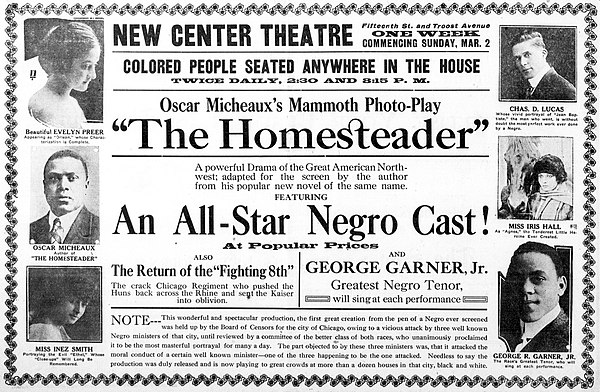
Celebrating African American Author & Film Producer, Oscar Devereaux Micheaux

A celebration of Black History, honoring African American author and film producer, Oscar Deveraux Micheaux, prominent sound and silent filmmaker during the 20th Century.

As an African American amateur writer, blogger, aspiring author, and lover of all things about theatre and film, on this last calendar day of Black History Month–a month where Black Americans focus our attention on the significant contributions made by past and present Black Americans to the United States, I chose to honor the life of Mr. Oscar Deveraux Micheaux in this month’s blog.

During a time when Black people faced various struggles in the Hollywood film industry (oftentimes excluded), Oscar Micheaux made significant accomplishments for the African American community as a writer, film producer, director, and entrepreneur. “[He] is regarded as the first major African-American feature filmmaker, a prominent producer of race films, and has been described as ‘the most successful African American filmmaker of the first half of the 20th century,’ [producing both silent and sound films.]”[1]

In his book, Slow Fade to Black: The Negro in American Film, 1900-1942, Thomas Cripps (1993) states, “Most early Negro appearances in film followed the Southern stereotypes of the wretched freeman, the comic Negro, the black brute, the tragic mulatto, in keeping with literary and theatrical tradition…to understand the history of Afro-Americans in the history of the cinema is to see a race in tension with white supremacy, in conflict with itself and its own ideals, in a quest to overcome disabilities, and moving slowly toward a viable cinema identity and an honest contribution to Hollywood movies. These stereotypes…were prevalent in Hollywood films up to 1942.”[2]  It is noteworthy how most of Micheaux’s novels and films centered around the social oppression of Black people during this time. Hollywood was not equipped or interested in producing films for African Americans, so, independently, Oscar worked outside of Hollywood and against it, producing over forty-four films–both sound and silent. His first film, The Homesteader, was produced in 1919, and his last, The Betrayal, in 1948. He also has seven novels to his credit. “[His] life and career can be divided into three phases: his years as homesteader and novelist (1910-1917); his years making silent films (1918-1930); and his years as a maker of sound films and as a novelist (1931-1948).”[3]

DJ Spooky, a.k.a. Paul D. Miller, continues by informing us how “…there was generally deep segregation in the [film] industry…Black creators [were] largely relegated to the sidelines, and Black performers largely forced to conform to, and thus reinforce, stereotypes in major Hollywood films throughout the 20th century… A genre of films known as Race films became popular. These films featured Black actors and were shown primarily to Black audiences. Many Black filmmakers during this time were able to independently produce and distribute films that focused on the everyday life of what it meant to be Black in America. [They] used this medium to combat stereotypes and set the tone for an independent Black cinema.”[4] This is where Oscar Micheaux would have an impact.

Born in 1884, the 5th child of 13, to Calvin S. and Belle Michaux in Metropolis, IL, Oscar’s father was born a slave in Kentucky… The best schools were available there and Oscar received his basic education. Betti Carol VanEpps-Taylor, (1999) writes in her book, Oscar Micheaux: Dakota Homesteader, Author, Pioneer Film Maker: a Biography, “Micheaux grew up during a transitional period for African Americans. Some of the four million freedmen benefitted from post-Civil War programs, but many struggled with poverty, bigotry, denial of franchise privileges, lack of access to education, and continuing oppression by a sharecropping system that replaced a legacy of slavery. [Most] looked to a small group of leaders for guidance and inspiration, and Booker T. Washington was the most influential African American at that time…He was the epitome of success, had risen from poverty and slavery to build a great school, and [became] a power broker and adviser to presidents.”[5] Surely, his mother’s deep religious beliefs and Bible teachings, coupled with the Washingtonian values of success through hard work, thrift, and economic ambition are what helped Oscar Micheaux face, yet overcome the varied challenges he did as he strove to become a prominent Black filmmaker.

As Micheaux grew, his journey took several paths. Discontented with local Black culture, and against his parents’ wishes, in 1901, he moved to Chicago with his brother, where he experienced “the good life.” He rented his own place and began to make and save money. He worked various jobs from the stockyards to the steel mills, [and as a shoeshine boy in a barbershop.]”[5] However, the job that most appealed to him and changed his life was working as a Pullman porter for the Southern Illinois Railways. In this job, he was able to travel and meet many affluent upper-class White people. He enjoyed hearing their stories because it kept him abreast of all the latest happenings. In addition, as his train route took him through the Western states in the U.S, he discovered a liking for it. Micheaux’s worldview expanded, he was able to save money, and eventually, he became a homesteader in South Dakota.

Patrick McGilligan, in his book, Micheaux, The Great and Only: The Life of America’s First Black Filmmaker (2009) concludes, “In his time, [Micheaux] became as famous—and controversial—as anyone in the field of so-called ‘race pictures.’ [He was] a self-made man who lived the American dream [and] boasted a record of undeniable achievement in spite of the obstacles erected against his race… He was the Jackie Robinson of American film. No, a Muhammad Ali decades before his time, a bragging black man running around with a camera and making audacious, artistic films of his own maverick style, at a time when racial inferiority in the United States was custom and law… [Micheaux’s films] were among the first films in history to attack lynching’s, segregated housing, gambling rackets, corrupt preachers, domestic abuse, criminal profiling by police, and all kinds of racial inequities.”[6]

Micheaux founded and was president of the Micheaux Film and Book Company (1920). Some of his films have been found and restored. His 1920 film, Within Our Gates—a race film response to racism–is available for viewing on YouTube or other streaming services. Three novels are available for download on Kindle: The Homesteader, The Conquest, and The Forged Note. There is an Oscar Micheaux Committee website where one can view a list of Micheaux’s novels and films, as well as a list of books written about him. Two of his films have been selected for the National Film Registry by the Library of Congress as being “culturally, historically or aesthetically” significant: Within Our Gates (1920) and Body and Soul (1925). An annual Oscar Micheaux Film and Book Festival is held in Gregory, South Dakota, where they honor the life and films of the African American homesteader and filmmaker.

So, in the spirit of Phil. 2:3 (HCSB), which states, “Do nothing out of rivalry or conceit, but in humility consider others as more important than yourselves,”  I want to thank the Lord for hearing about Oscar Micheaux. I am inspired by his story. His bravery to discover and use his gift at such a time when oppression, suppression, rejection, ridicule, and cruel treatment of Black people was at an all-time high is remarkable. Blacks were only recently freed from slavery, thus not seen as very significant at all. He blazed a trail for other African American actors, writers, and filmmakers. Now, African Americans are prominent on and off the Hollywood screen. We are writing books, and producing and directing films and theatre productions that speak to our experience in America and around the world. I’m excited to understand, as Micheaux did, that I can effect change through the written word. Against any odds, I can complete my first book, and, possibly, who knows, the film or play that’s been on my heart. You can too!

Americans, be inspired, you’ve made, and are making significant strides in race relations. African Americans, be inspired; while the struggle continues, we’ve made, and are making more headway. Human beings, be inspired because “trouble don’t last aways.” Thanks, Mr. Micheaux!

Be blessed until next time…


References

[1]Retrieved from https://en.wikipedia.org/wiki/Oscar_Micheaux

[2]Cripps, T. (1993). Slow fade to black: The Negro in American film, 1900-1942. Oxford: Oxford University Press. New Yor, NY. (pp. 7, 11).

[3]Bowser, P., Gaines, J, Musser, Eds, C. (2001). Oscar Micheaux & His Circle: African American Filmmaking and Race Cinema of the Silent Era, Indianan University Press, Bloomington, Indiana.

[4]Miller, Paul D. a.k.a D.J. Spooky. (January 2021). Race Films: The Black Film Industry That Told Black Stories in Cinema’s Earliest Days. Retrieved from https://editorial.rottentomatoes.com/article/race-movies/

[5] VanEpps-Taylor, B. C. (1999). Oscar Micheaux, A Biography: Dakota Homesteader, Author, Pioneer Film Maker [May 28, 1999]. Dakota West Books, Rapid City, SD.

[6]McGilligan, P. (2009). Oscar Micheaux: The Great and Only: The Life of America’s First Black Filmmaker. United Kingdom: HarperCollins. pp. 2-3.


Follow Me

Get new content delivered directly to your inbox.
Bearing Our Cross

What di Jesus Christ mean we He said, “Take up your cross?” Did He mean I would die on the cross as He did, or does this mean something else? Let’s find out what Jesus meant.

Photo by Pixabay on Pexels.com

During your life’s journey, have you been able to identify a cross Our Father, God, has intended you bear? I understand you are upset, depressed, and distressed about a situation? Under your breath or aloud, you’re still cursing, screaming, and walking around in a huff over a predicament you’re in. But have you ever stopped to consider, this may be a cross Christ is asking you to bear for His glory?

Sometimes, cross-bearing is brief. An illness has landed you a stay in the hospital for surgery or treatment of some kind. For this brief period, you’re in tumultuous pain, stagnant, and unable to work to pay the bills; everything halts. Other times, it’s a similar scenario or personality type you don’t like but continuously encounter. “This again,” you think, “I hate these people!” Lastly, some crosses leave a life-long painful imprint on us, and we carry its scars every day.  No prayer, life activity, or changes we’ve made erases the memory. The Apostle Paul experienced this. It is not identified as a cross but as a thorn that he was given. “I was given a thorn in my flesh, a messenger of Satan, to torment me. Three times I pleaded with the Lord to take it away from me. But he said to me, “My grace is sufficient for you, for my power is made perfect in weakness” (2 Cor. 12:7-9). Paul had scars to live with. He tells us, they were given to keep him from becoming conceited. Hmmm! Do crosses, thorns, and pain help with this human malady?

We find in Matthew 16:21-26 dialogue specifically about cross-bearing. What is it? And, who’s it for? According to this text, those who ascribe to being a Christ-follower must take and bear a cross; it’s a part of being united with Christ and sharing in His suffering. I remember having this discussion with an old friend of mine. He completely rejected this idea. Any notion of suffering was a result of negative thinking on others’ part.  When discussing various unpleasant experiences he faced, I would offer him a cross-bearing perspective to help him try to recognize possibly a lesson God was teaching him or character development He was building in him. His response was always the same, “Look, that was Jesus; I’m not Jesus.”

In our text this month, we find Peter also rejecting such negative ideas about suffering. Jesus foretells His suffering and death to his disciples. The text states, “From that time Jesus began to show his disciples that he must go to Jerusalem and suffer many things from the elders and chief priests and scribes, and be killed, and on the third day be raised. And Peter took him aside and began to rebuke him, saying, “Far be it from you, Lord! This shall never happen to you.”

Doesn’t Peter sound like us? During tough times and in challenging conversations, we tell our loved ones, “Stop being so negative. I rebuke that depressing spirit off you.” Peter was possibly trying to console the Lord, lift Him out of despair, or maybe change His perspective. In a sidebar conversation, I imagine Peter saying, “Come on, Lord, you’re the Messiah. You’re a great man doing all these wonderful things for people. And, we’ve been waiting for you all these years, you finally appear, and now you’re going to tell us this? Look, nothing like this is going to happen to you, especially while I’m here. Trust me!” Society tells us to stop being so negative and focus on the positive. We tell family and friends, “You’ll be fine; don’t worry about it!” Satan is usually the culprit for our negative feelings. Not always so, as we see here. Despite Peter’s well-meaning intentions, he was wrong. Jesus rebukes him. “But he (Jesus) turned and said to Peter, “Get behind me, Satan! You are a hindrance to me. For you are not setting your mind on the things of God, but on the things of man.” Ha! Now, how about that? Peter’s kind words are coming straight from hell, and Jesus recognized this because He knew He had to bear a cross.

I don’t think it is happening this way today in our “name it, claim it” prophetic Christian subculture. We actually are accused of and rebuked for “speaking it into existence.” Have you received one of those “just claim it” words during your Christian journey that did not happen as it was proclaimed? Unfortunately, this ideology is running rampant now. People are disheartening individuals by telling them untruths to appease them.

Jesus’ somber, troublesome news to His followers was necessary and true. The disciples would later see it happened just as He said. Jesus uses this blunder by Peter to drive home a point for them and us. “Then Jesus told his disciples, “If anyone would come after me, let him deny himself and take up his cross and follow me. For whoever would save his life will lose it, but whoever loses his life for my sake will find it. For what will it profit a man if he gains the whole world and forfeits his soul? Or what shall a man give in return for his soul? 

Cross-bearing involves:

  • Conforming to Christ’s image
  • Denying yourself
  • Taking (accepting) the cross while continuously following Him
  • Losing one’s life for Christ’s life
Photo by Pixabay on Pexels.com

Conforming to Christ’s image involves sharing in His suffering too. Cross-bearing will challenge our ideals, worldviews, perspectives, dreams, hopes, and desires. It will involve taking actions, making decisions, and/or expressing views, etc. that are counterintuitive to who we are. As we take up our cross and continue to follow Christ, at some point, any ill feelings, ill will, dislike, anger, resentment, and/or grumbling, complaining, and blaming should end. It’s an exchange Christ has called us to make for Himself. We can, however, choose to reject our cross in order to gain the world.

My fellow believers, from a human perspective, our cross may be difficult, as it was for Jesus Christ. We may want to say at times, “Oh no, not this,” or pray, as Paul did, for a problem to be removed. Don’t, however, discount or not recognize your cross because of erroneous satanic teaching happening in the Church today. Understand that, while bearing a cross, sometimes: it will not be fine. It will hurt. It will be painful. It will drive you to despair. It will cause you to cry. It will involve blood, sweat, and tears.  It will baffle your mind. It will make you sad. It will anger and frustrate you. It will be tiresome. It will cost you a lot of money. It will be risky and make you feel uncomfortable. It may require you to take medication or an infusion. It may mean, let it go. It may mean changing your perspective about a race or culture of people. You may have to embrace, live among, or help those you don’t like. It may be, no, it’s not that one; it’s this one over here. It may be, forgive and stay. It may be, forgive and leave. It may be, marry this one, not that one. It may be, not this career, this one. It may be, give that up. It may be growing up poor. It may be, anoint this one for ministry, not that one. You may lose the job, the contest, the award, the beauty pageant, or the business deal. You may be overlooked, rejected repeatedly, unfriended, lied on, and cheated. However, whatever you discover is your cross, don’t despise it. Pick it up and keep “looking unto Jesus, the author, and finisher of our faith, who for the joy that was set before Him endured the cross, despising the shame, and has sat down at the right hand of the throne of God” (Hebrews 12:2 NKJV).

Happy New Year! 😊

Follow Me

Get new content delivered directly to your inbox.